
Although, after this summer’s heatwaves, those numbers are becoming increasingly tangible.
The problem is that societies do not live inside a global average. Unfortunately for us, Europe is one of the hardest-hit regions. Our entire lives are also organised around a model that makes no allowance for these rising temperatures. From housing to electricity generation, everything was designed for a climate that no longer exists. Climate change is therefore also, and above all, an economic and social issue.
Adaptation is often presented as an additional expense. It could turn out to be precisely the opposite: a way to avoid paying a much higher price for our lack of foresight and reckless behaviour.
I should point out that this article grew out of reading the French High Council on Climate’s 2026 annual report, particularly its chapter on climate impacts and the benefits of adaptation. And I admit that reading it leaves you with a rather strange feeling.
It is all there.
The heatwaves. The deaths. The illnesses. The agricultural losses. The overheated schools. The weakened infrastructure. The pressure on water supplies. The insurance industry starting to splutter. The houses cracking. The retreating coastlines. The dying forests. That list alone is frightening.
The report makes it clear: we know exactly what needs to be done. Renovate buildings, plant more greenery, replace sealed surfaces with permeable ones, protect the most vulnerable, transform agriculture, adapt working conditions and rethink land-use planning.
Yet, as risks increase rapidly, our responses and adaptation measures remain far too limited. Eventually, a fairly simple question becomes unavoidable: if we know all this, why have we waited so long?
It has been ten years since the Paris Agreement was signed. Ten years of reports, plans, strategies, consultations, pathways and grand declarations. Of course, after wasting so much money on idiotic handouts, after effectively buying elections, it is now difficult to ask citizens to cough up.
Besides, when people in France mock the American president for offering citizens $5,000 if they vote for him, we should ask ourselves whether we do any better here. Looking at what has happened in France over the past decade, we are hardly in a position to lecture anyone. Instead of explaining to voters that gradually moving away from fossil fuels would require sacrifices, our leaders preferred to splash money around, subsidising the very fuels they should have been blacklisting!
And they have no shame! Now they tell us the coffers are empty and the French public must pay. Seriously! And then we wonder…
The climate is changing. So is the bill.
Human-induced warming reached around +1.4°C in 2025 compared with 1850–1900. It is expected to reach +1.5°C in the coming years.
The consequences are already visible. There is little point listing them again: we all know them by now, and we are all beginning to experience them, sometimes with devastating consequences. Yet that is only the weather-related side of the problem.
Heatwaves, droughts and repeated flooding increase mortality, overwhelm hospitals, worsen working conditions and disrupt schools. They affect crop yields, weaken forests and create tensions over water. Then there is the damage to homes, businesses and infrastructure, along with rising insurance costs. All these problems are connected, of course. Especially now that they follow one another with almost ritual regularity.
The High Council on Climate rightly stresses this systemic dimension. We can no longer treat risks separately, because they can spread from one sector to another. And every time, the most vulnerable suffer the most.
Working and living in a 40°C world
Take heat alone. We endured it this summer. Across Europe, exposure to dangerous heat affected our nights and our ability to work. Many occupations are now particularly vulnerable: construction, agriculture, maintaining public spaces, logistics…
Adjusting working hours, protecting employees, adapting buildings and sometimes suspending certain activities are becoming necessities. All this requires thought, organisation, planning and, where necessary, enforceable rules. But no. We suffer through it, wait for it to pass, then cry about it again the following year.
Climate change directly harms businesses and everyday life. It is also beginning to put severe pressure on hospitals. In France, the report estimates that more than 5,700 deaths were attributable to heat exposure during the summer of 2025. During heatwaves, these deaths accounted for up to 12% of recorded deaths from all causes.
Meanwhile, cities and schools remain dominated by concrete and tarmac, turning into furnaces that are unbearable and even dangerous.
The proposed solutions are always simple, if not simplistic. They often generate profits today while causing harm tomorrow. The spread of air conditioning is the clearest example. At every spike in temperature, we install a few more units. Then we pump heat outdoors while consuming more electricity.
There is humanity’s extraordinary ability to turn a problem into a market before asking whether we might be better off eliminating part of the problem. And, to be honest, after almost 50 years of inaction, air conditioning is becoming the only available option in some places, such as hospitals and urban homes that turn into ovens.
Insurers eventually stop covering the uninhabitable
Then there is a subject we hear curiously little about: whether our world will remain insurable. Insurance is part of the wider economic system. Without it, everything falls apart. Just look at what happens in the Strait of Hormuz: Iran fires three missiles at a ship and the entire oil trade grinds to a halt. Prices soar as a result.
The insurance system largely rests on the assumption of a relatively stable world, without war or “uninsurable” risks. Insurance works reasonably well when damaging events remain relatively exceptional.
When disasters become recurrent, the system can no longer cope. It starts to crack, leaving governments to step in. The problem becomes critical when those same governments are deeply in debt and close to insolvency!
Meanwhile, risks are multiplying everywhere: flooding, clay shrinkage and swelling, disastrous harvests, heat, hail…
The High Council already considers France’s crop insurance, local authority insurance and natural disaster compensation schemes weakened by these mounting losses. This is only the beginning of a long list that will certainly keep growing.
There is also a limit that is difficult to get around. It is obvious enough: you cannot insure something forever if it is becoming uninhabitable, and therefore uninsurable. An insurer is under no obligation to cover a property. Insurance companies are not charities. We would have noticed!
Soon, the question will no longer be: “How much does insurance cost?” It will be: “Who has to pay?”
Everyone will have to contribute, and it will hurt: property owners, insurers, local authorities, governments and taxpayers will all see their bills rise. Welcome to the economics of climate change.
Agriculture’s new rules
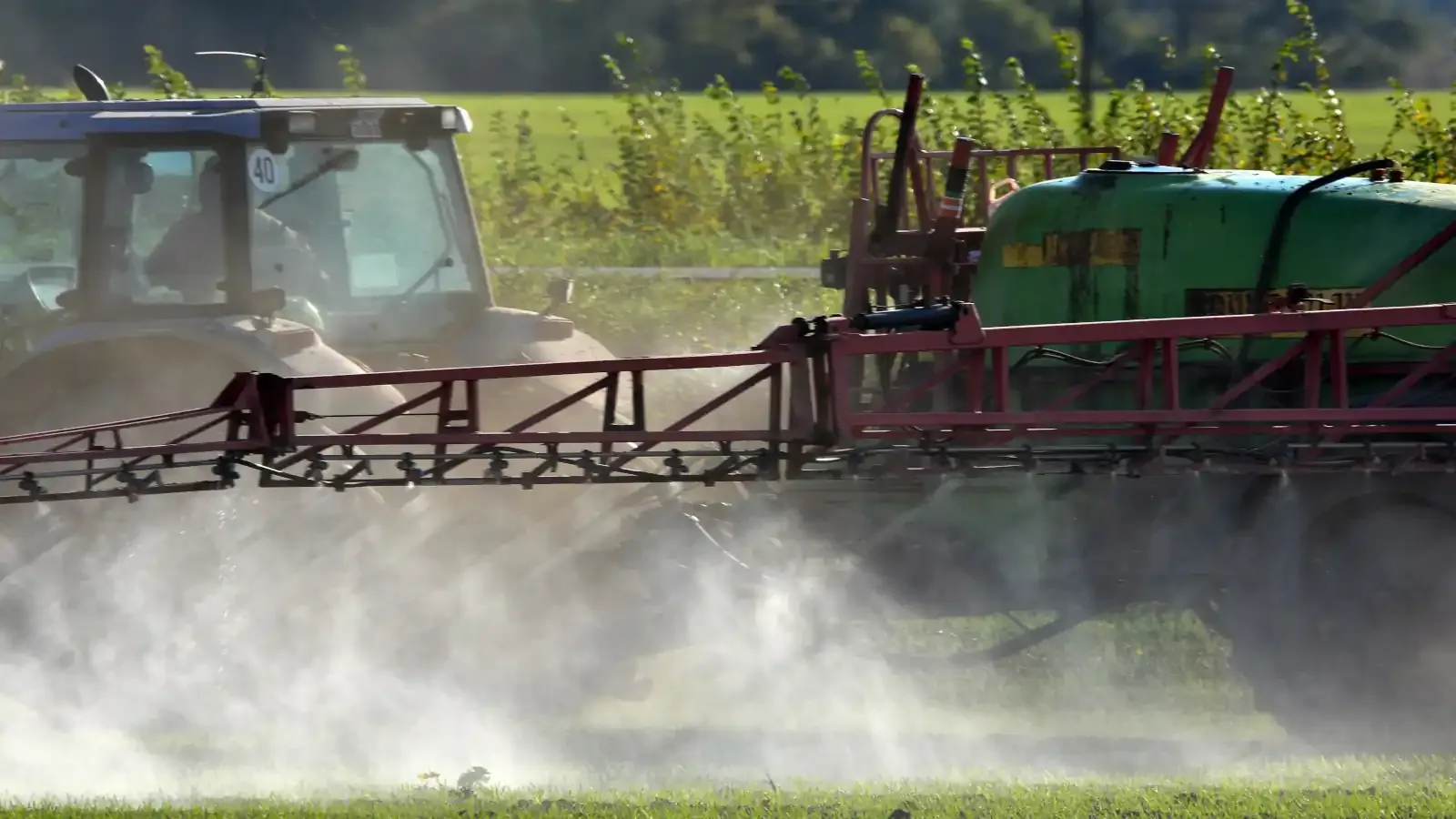
Agriculture is clearly on the front line. It depends on precisely the things climate change disrupts: temperature, rainfall, water availability, soil conditions, pollinators and the timing of the seasons. And let us be clear: the problem is not simply that we will get less rain, as we are experiencing right now.
The water cycle is also becoming more variable and more intense. Everything is being thrown off balance. Farms may lack water in June and receive far too much a few months later. The old agricultural world, built on relative climatic stability, is gradually disappearing too.
Adapting crops, restoring soils, developing agroforestry, conserving water and diversifying production are no longer the whims of eccentric environmentalists. They are already matters of food security. Poor harvests in Europe can also destabilise North African countries that depend heavily on grain imports. Egypt, the world’s largest wheat importer, has to turn to Europe to meet its needs. Rising international prices weaken its economy and threaten the stability of subsidies for an essential food: bread.
We see it every day: when agriculture is under strain, the economy is at risk and social stability comes under threat.
If adaptation is expensive, what about inaction?
Greening cities is expensive. Renovating buildings is too expensive. The same goes for adapting schools and transforming agriculture… Of course. But rebuilding properties, compensating farmers for destroyed crops, repairing roads, treating more patients and compensating communities whose areas have become uninhabitable costs even more. And all that money spent on repairs and compensation will no longer be available to improve our surroundings or fund our present, let alone our future.
Besides, tackling climate change and adapting to it offer a particularly valuable benefit: they generally improve everyday life. They reduce fuel poverty, improve air and water quality, and protect soils and biodiversity.
The High Council on Climate emphasises that adaptation reduces fuel poverty, creates local jobs that cannot be offshored, strengthens competitiveness and limits agricultural losses. It also helps reduce inequality.
It is quite frightening how often climate action and adaptation are portrayed as some dreadful punishment when they can actually improve our quality of life.
Beware of stupid adaptation
Although adaptation costs less than inaction, that does not mean every form of adaptation is desirable.
Covering cities in air conditioners is no answer to heatwaves. Increasing water withdrawals is no answer to water scarcity either. Nor is protecting buildings at any cost in areas destined to flood regularly. This is called maladaptation. Broadly speaking, it means a response that may reduce a problem in the short term but increases risk or shifts it elsewhere, often making people even more vulnerable.
Adaptation cannot therefore mean keeping the Western world exactly as it was, with a few extra air conditioners and sea walls. Once again, it forces us to confront questions we hate asking: should we carry on like this? And, above all, why is change non-negotiable?
Pay now or pay more later
Adaptation can always be presented as a burden imposed by a few irritating environmentalists. That is the fashion, after all. With one or two exceptions, political parties endlessly repeat this disparaging narrative, often fuelled by nostalgia for an idealised past.
We can also see adaptation for what it really is: a genuine public health policy, as well as an economic, agricultural, housing, land-use planning and social protection policy…
Because, to be blunt, climate change will not affect us equally. If you own a well-insulated home, have a shady garden and can afford to move when danger strikes, you will not experience a heatwave or flood in the same way as someone living in an overheated flat or owning a house that has become impossible to sell. Climate disruption, along with the degradation of biodiversity and ecosystems, therefore also reshapes the question of social justice.
Our leaders, and we as citizens, have long believed, or wanted others to believe, that adaptation would cost too much. But we are beginning to realise, dangerously late, that one question should concern us all, collectively and individually: how much are we prepared to pay, socially, economically and environmentally, to keep refusing to adapt?