




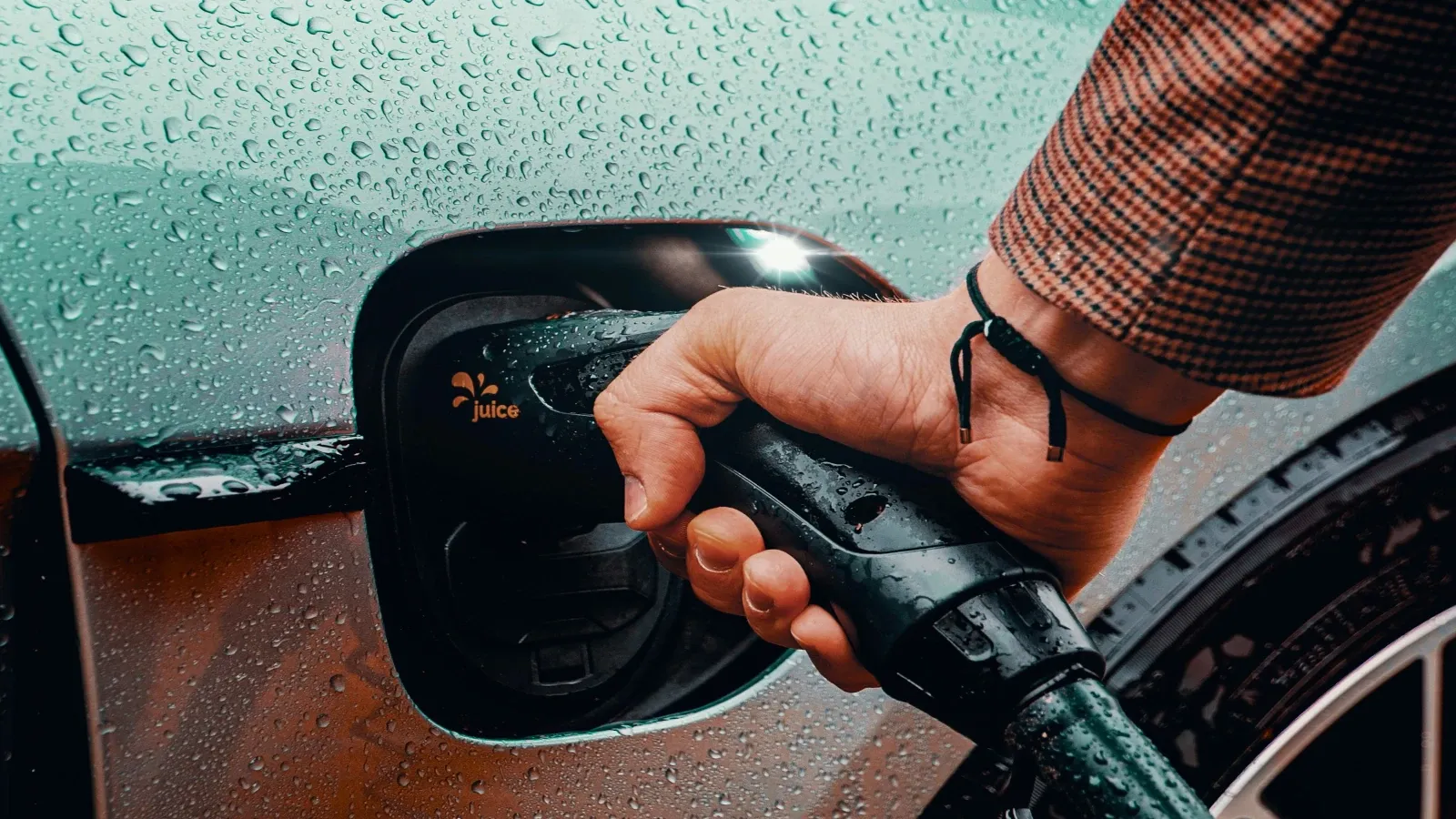


Simply replace a fuel tank with a battery and an internal combustion engine with an electric motor, and we would miraculously find ourselves on the road to a sustainable future.
Even adverts now show huge electric SUVs driving through lush green forests. Nature must be delighted. But let us be clear: an electric car does not grow in a field of solar panels. Manufacturing one requires mining minerals, making batteries, generating electricity, building infrastructure and, eventually, recycling the whole lot.
So what should we think? Are electric vehicles an environmental advance, or a new way to carry on as before? Unsurprisingly, the answer is neither entirely black nor miraculously green.
On Climate, the Contest Is Almost Settled
Let us start by acknowledging something obvious: over its entire life cycle, an electric car emits considerably fewer greenhouse gases than a petrol or diesel car. This is particularly true in countries such as France, which rely heavily on nuclear power. Charging in a country heavily dependent on coal produces a different result. Where the battery is manufactured matters too.
But we still need to count properly. A life-cycle assessment must include manufacturing, the battery, energy production, use and the vehicle’s end of life.
Manufacturing an electric car generally emits more CO₂ than manufacturing a combustion-engine car. But that initial disadvantage diminishes as the kilometres add up.
In France, thanks to largely decarbonised electricity, the climate advantage generally emerges after a few tens of thousands of kilometres. Around 30,000–40,000 km is a commonly accepted order of magnitude. Assuming a battery lifespan of roughly 150,000–200,000 km, an electric car can generate around three to four times fewer greenhouse gas emissions than a comparable combustion-engine car.
My little 2022 Zoe has just passed 40,000 kilometres. It is therefore probably beginning to offset the additional emissions associated with its manufacture.
Over time, electric cars generally win the climate contest. That does not mean they win every environmental contest. Especially when the battery onboard is a technological monster packed with “rare” metals.
On Efficiency, There Is No Contest Either
Electric cars remain considerably more efficient than combustion-engine cars. That is an undeniable advantage when choosing between the two powertrains. At equivalent size and performance, there really is no contest.
An electric motor converts around 80–90% of the electrical energy it receives into mechanical energy. For a combustion engine, the figure is around 20–40%. In a country such as France, the electric car therefore has by far the better climate record over its entire life cycle.
But perhaps the problem lies elsewhere: an electric car is still a car. Manufacturing it requires the same resources as a combustion-engine vehicle, plus a battery. Even during use, it continues to wear down roads, tyres and brakes, although regenerative braking limits wear on the latter. The same road infrastructure is still necessary too.
So while the electric motor’s superior energy efficiency is hardly in doubt, one substantial problem remains. If we let manufacturers keep replacing combustion-engine SUVs with electric equivalents, we will have reduced emissions during use while preserving much of what is wrong with our car-based model. These vehicles, weighing two tonnes or more, will continue to require almost the same initial resources, plus those needed to manufacture their huge batteries. That is hardly an “ecological revolution”.
The powertrain is much more efficient. It would be a real shame to use that advantage to manufacture ever-bigger, heavier and more powerful cars requiring ever more resources and energy that we could soon find ourselves short of. Even if that means bigger profits for manufacturers. Especially since everyone will ultimately bear the consequences.
Here too, unfortunately, technological progress sometimes allows us to consume less while continuing to want more.
Batteries Will Never Grow on Trees
The automotive transition relies on a vast mining industry. Lithium, nickel, cobalt, graphite, copper, aluminium… Extracting these resources requires energy, water, infrastructure and numerous chemical treatments. The consequences include soil pollution, damaged ecosystems and pressure on water supplies. Not to mention multiple human rights abuses: mistreatment, rape and child exploitation.
Battery technology is evolving, of course. Technologies such as lithium iron phosphate, or LFP, use neither cobalt nor nickel. They still require lithium, graphite, aluminium and copper, however, along with various chemical compounds used particularly in electrolytes and separators.
An honest comparison between the two powertrains also requires remembering that oil must be extracted, transported and refined. Every stage causes pollution. And a combustion-engine car keeps consuming it throughout its lifetime.
There is another major difference: battery metals can be recovered and reused. Burnt oil cannot. Which brings us back to the same recurring question: should we devote so many resources to transporting one person every day in a two-tonne vehicle? Especially when credible alternatives exist!
Recycling Batteries: Possible, but Not Magic
Contrary to what we regularly hear, a car battery does not automatically become unusable after eight or ten years. Its lifespan depends on its chemistry, temperature, use and charging cycles. Sometimes it can even outlast the vehicle. A colleague of mine drives a 2017 Zoe R90 to work and on short everyday trips. After 100,000 kilometres, its battery still has a state of health, or SOH, close to 90%. He intends to get a few more years out of it before replacing it.
At the end of their automotive life, some batteries can also serve as stationary storage, at home for example. This is an interesting way to give used batteries a second life. Others will enter recycling facilities.
Processes such as hydrometallurgy can recover various materials, particularly nickel, cobalt and lithium. But again, there is nothing magical about it. Recycling consumes energy, sometimes substantial amounts. Using sulphuric acid, hydrogen peroxide or other reagents to separate the elements is not environmentally harmless. Costs also remain fairly high, and not all materials are always recovered.
Another constraint is timing: the years metals spend inside vehicles delay their recycling. Recycling cannot immediately supply a rapidly growing market. To meet today’s demand, we mine. Batteries sold today will often remain in use for many years.
A genuinely circular battery economy will therefore develop at scale. But we are still a long way from it. And it will not happen without environmental consequences.
Less Air Pollution, but Still Particles
Electric cars emit neither nitrogen oxides nor exhaust particles. That is great news for people’s health, particularly in cities. Regenerative braking also reduces brake-pad wear.
Tyres and road surfaces, however, continue to produce particles. Tyre wear on electric vehicles is often greater, particularly because of their generally higher weight, mainly attributable to the battery.
Some forms of pollution disappear; others persist or move elsewhere. Electric power does not eliminate car pollution: it fundamentally changes its nature and, partly, its location.
As for congestion, land development and the space occupied by cars, electrification solves absolutely nothing. An electric SUV is still an SUV. Even with a green leaf painted on the bonnet.
The Problem Is Not Just How Much Electricity We Need to Generate
An electric car generally consumes between 15 and 20 kWh per 100 kilometres, excluding charging losses: energy dissipated as heat in the charger, cables and other electronic components. That is the average I observe with my Zoe, although it varies according to the model and conditions.
Without wanting to repeat myself, let me stress that under the vast majority of comparable operating conditions, an electric motor converts energy into movement far more efficiently than a combustion engine, at equal vehicle weight. That is a major physical advantage.
One argument regularly resurfaces to justify inaction: widespread electric-car adoption would cause an unbearable increase in electricity demand. Although this is clearly a constraint, and potentially a limit on the system, it is not necessarily insurmountable.
The main difficulty is when vehicles charge. If ten million motorists plug in at exactly the same time, the grid must meet an enormous demand for power. On a summer afternoon, surplus solar generation could well meet that demand. In winter, things become considerably more complicated.
An entirely electric vehicle fleet will therefore require extensive charging management to reduce demand during peak periods.
Put simply, you get home around 5 p.m. You plug in your car, whose battery is still half full. You do not intend to leave again until the following morning. The charging system must be able to delay charging until demand is lower—roughly speaking, overnight. Naturally, you must be able to override that delay when necessary. Managed charging can therefore reduce peak power requirements.
Another advantage of electrification is that a car battery could become an active part of the electricity system. A component connected to the grid that sometimes draws energy and sometimes supplies it for other uses, at home or on the grid. We are not quite there yet, although some homes are beginning to incorporate these control systems. It certainly deserves consideration.
What if Cars Became Batteries for the Whole of Society?
This is one of the most interesting possibilities offered by electric mobility. My car spends much of its life parked. Meanwhile, its battery could do something other than wait for the next journey.
With intelligent charging, known as “smart charging”, the vehicle can charge when electricity is abundant, particularly during periods of strong solar or wind generation. Bidirectional technologies such as Vehicle-to-Home and Vehicle-to-Grid allow it to supply energy back: respectively, powering a home from the vehicle’s battery and returning electricity to the grid.
Imagine my car has a 52 kWh battery. If it reserves 20 kWh for future journeys, it could theoretically make some of the remaining 30 kWh available to the home or grid. During the day, it could store surplus solar generation. In the evening, it could help power the house. Electric cars could therefore become valuable tools for integrating renewables into the electricity system.
Brilliant, isn’t it? The man who installed my wallbox a few years ago explained these management systems, which already exist and work at the scale of a home, apartment building or business. I thought it was extraordinary. Then I nearly cried when he gave me the approximate price for my modest 100-square-metre house on a housing estate: between €27,000 and €35,000. That includes the heat pump.
I would love to. But I simply cannot afford it. So yes, the price is an obstacle, even if the savings are real. Depending on the savings actually achieved, the payback period could stretch to fifteen or twenty years, perhaps longer. It is probably an option for new builds, but more complicated for existing homes, especially at my age.
Then there are equipment compatibility issues, energy losses, battery ageing and safety, vehicle availability…
I do not know whether I will live to see these bidirectional systems become widespread. For now, they cannot be rolled out industrially on a large scale. Despite these limitations, cars could become much more than a means of transport: a genuine component of the electricity system.
Making Fewer Cars: The Only Real Revolution
Yes, electrifying mobility is essential, both for the climate and for energy efficiency. Yet it relies on advanced technologies that are not necessarily ready for universal adoption and can themselves be fragile and energy-intensive.
Reducing vehicle numbers and distances travelled is therefore one of the most direct ways to reduce the environmental pressures associated with cars. The climate and health benefits would undoubtedly be substantial and visible.
We therefore need to manufacture and sell fewer private vehicles. Enough enormous, heavy cars for driving around town. Design needs to move towards smaller, lighter, more repairable and longer-lasting vehicles. Alongside this, we need good public transport, car-sharing, cycling infrastructure and accessible public services. Without both sides of this transformation, everyday transport will either fail to change or change painfully.
Above all, that means not making people feel guilty when they have no alternative to the car.