





Sorry, Technology Alone Won’t Save Us
According to some people, all we need to do is wait a little longer. Keep waiting, as though established facts and reality were not already making the problem clear enough.
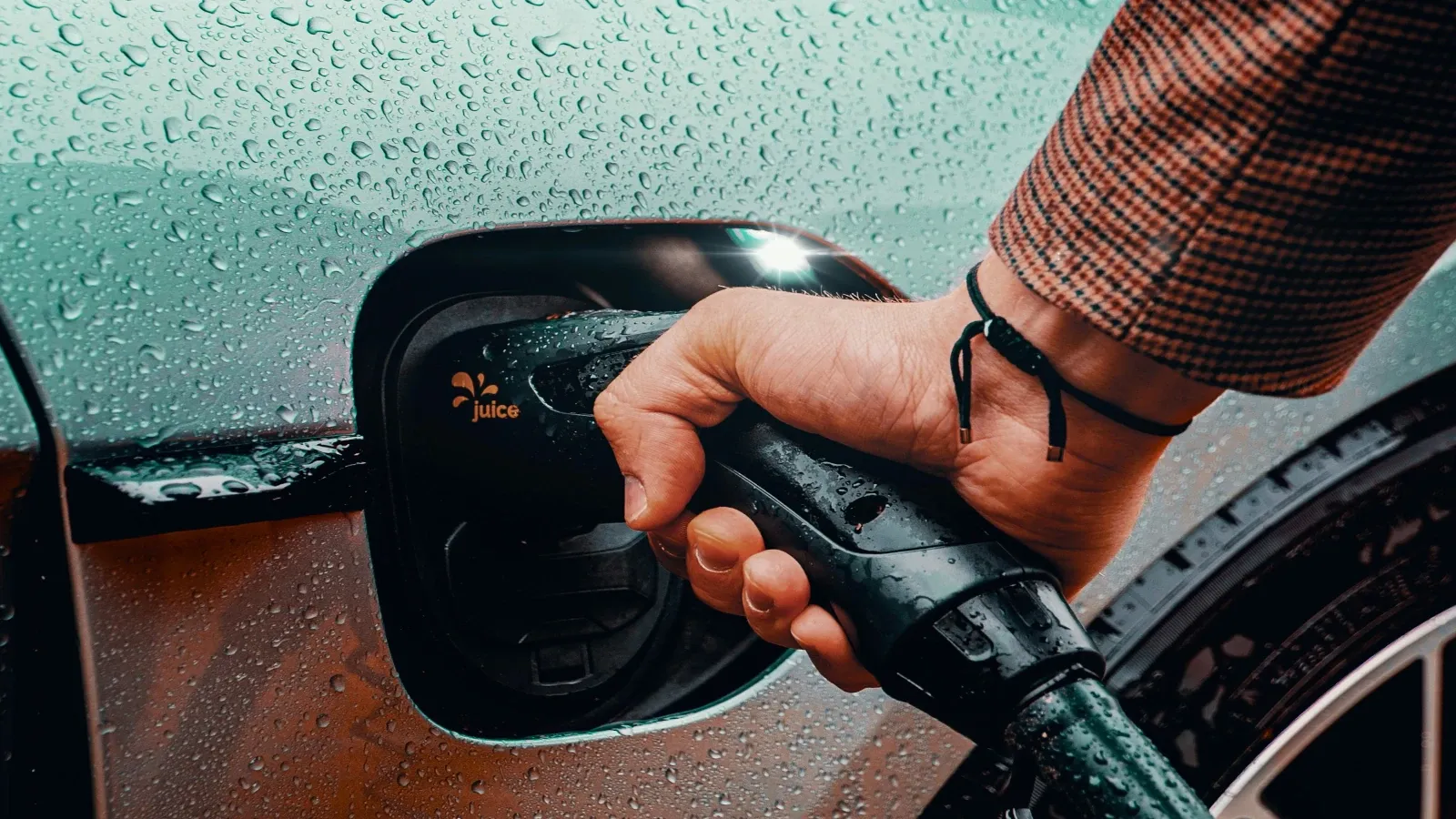
Wait for what? Electric cars everywhere, perhaps. Hydrogen-powered planes, more efficient reactors, endless solar panels, a few billion algorithms and, why not, machines capable of sucking CO₂ straight out of the atmosphere.
With enough engineers, researchers and start-ups, humanity would eventually repair the world it has helped demolish. Why not? It is true that I do not have a crystal ball.
That said, I see one enormous advantage to this belief: it allows us to avoid changing anything fundamental. Technology would improve the situation and eventually solve every problem humanity faces.
The car stays; it simply becomes electric. The same goes for the plane, except its fuel becomes “sustainable”. Consumption keeps increasing, with recyclable packaging and “sustainable” transport too. As for growth, questioning the concept is out of the question. We just paint it green.
The Planet Is Not a Broken Machine
Technology excels at solving certain problems. An engineer for every problem. When all you have is a hammer, everything starts to look like a nail, as Abraham Maslow put it. Basically, when we keep treating technology as our best tool, we end up viewing every problem in a way that makes it look like something technology can solve.
We ask engineers to solve problems. But we rarely allow them to ask whether the framework producing those problems deserves to be preserved. The system can therefore carry on without ever being questioned. Thankfully, some people challenge this. In the 1970s, for example, the mathematician Alexandre Grothendieck criticised research that claimed to be neutral while participating in economic, military and industrial structures whose objectives it barely questioned.
One problem, one engineer, one solution.
The trouble is that many have received the same training, learned the same methods and absorbed a fairly similar understanding of progress. Under those conditions, imagining anything beyond variations on what already exists is difficult.
Yet science should also help us do precisely the opposite. Science also means disrupting, unsettling certainties, challenging what seemed established and opening paths nobody had considered.
But things get more complicated once we leave the laboratory. A society is not a machine. Neither is the climate. You cannot take an ecosystem apart, replace the faulty component and switch the whole thing back on.
These are complex systems. Systems in which thousands of interactions produce consequences that are often unpredictable and sometimes uncontrollable. Changing one element changes the others.
Yet we often present the ecological transition as a response to a bug in the system, a mechanical fault: too much CO₂, too many cars, too much plastic. Transition would therefore mean decarbonising energy, reducing the number of polluting cars and recycling plastic. An engineer for every bit of damage.
At no point do we stop to ask: why produce, transport, extract and consume so much?
An Electric Car Is Still a Car
Let me take an everyday example, a wonderfully modern object: the car, which keeps becoming more efficient.
Technical improvements can reduce the energy needed to travel one kilometre. But those gains can easily disappear if vehicles become heavier, more powerful, more numerous or travel further. That is the irony of technological progress: making an object more efficient offers absolutely no guarantee that its overall footprint will shrink.
And even a miraculously carbon-neutral car would still need raw materials, roads, car parks, tyres, infrastructure and space.
We keep changing how these vehicles are manufactured. Without ever considering how many it would be reasonable to make. That question no longer belongs to the engineer. It is left to politicians, who dismiss it, or to an ethical debate we reject for sounding too much like moralising. Ultimately, what is at stake is our understanding of a desirable life, a life worth wanting.
A question technological solutionism conveniently obscures. On the surface, at least.
Clean, Cheap Energy Will Destroy Everything
Now imagine the impossible: abundant energy, entirely carbon-free, with no waste, no pollution and almost no cost. Miracle achieved. Are you sure? Have you asked yourself what we would do with it?
Once again, this is Aurélien Barrau’s central argument. He repeats it in every media appearance, and what can I say except that he is absolutely right?
“What is at stake is our way of inhabiting space. The point now is not to create a clean energy source, because a solar-powered bulldozer can raze the Amazon rainforest. We may not have emitted any CO₂, but we will still have razed the forest. What we need now is to understand that life has value in itself.”
Likewise, paving over land with solar-powered machinery will not make concrete more ecological. Nor will extracting billions of tonnes of materials using carbon-free energy somehow make resources infinite. There are plenty of examples.
What Aurélien Barrau is saying is that clean energy could quite easily perpetuate the destruction of the living world that the Western world began almost a century ago.
The technological narrative completely sidesteps this perspective. It talks constantly about means and almost never about ends. Yet the question is fundamental. Whatever energy powers today’s world, and even if changing it avoids greenhouse gas emissions, we first need to ask what this world is so frantically trying to keep running.
Technological Progress Has No Compass
Science explains climate disruption. It measures the collapse of an animal population, models an ecosystem, improves a battery or designs a medical treatment. Yet human beings should be the ones deciding what they want.
You and I must remain in control of our choices: how much we consume, what gives existence meaning, what place other species should occupy, or what a society is willing to sacrifice for its own comfort.
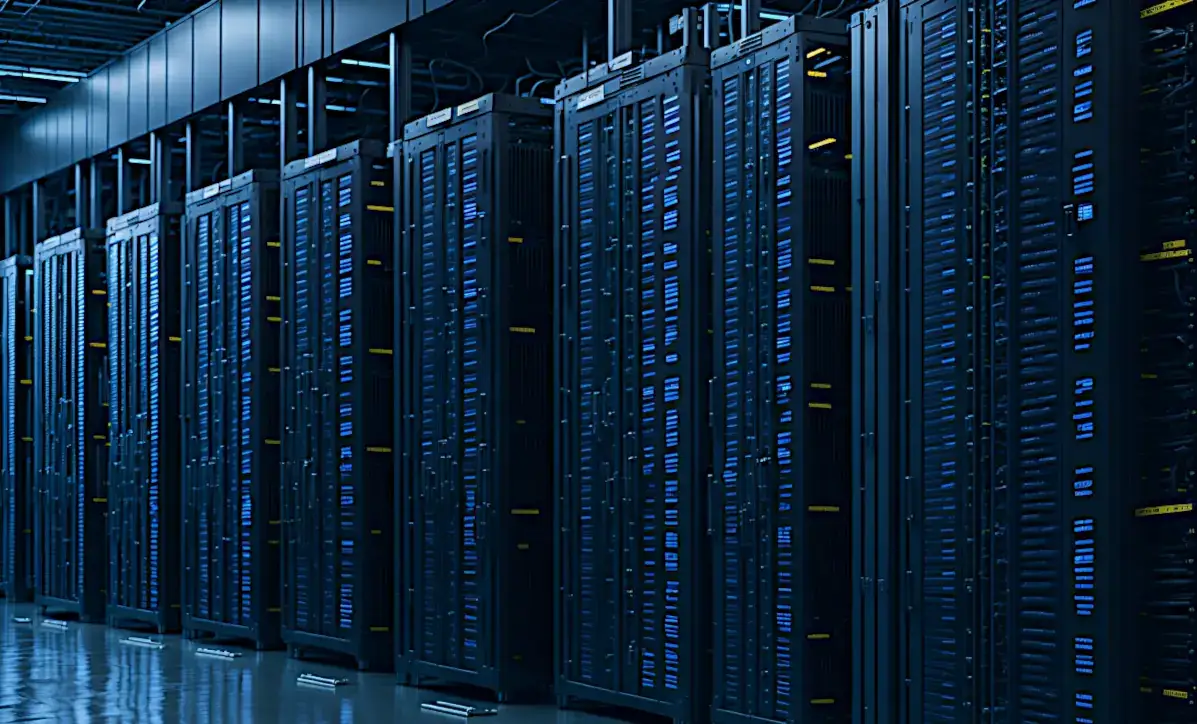
Handing those choices over to technology is precisely what many people do when they ask a chatbot where to go on holiday and how to organise the trip. This resource-hungry technology may optimise the itinerary with remarkable precision, but it remains hopelessly incapable of saying why we need to go in the first place.
The Fantasy of a World That Stays the Same
When you think about it, that is what technological solutionism promises. A world in which tomorrow looks an awful lot like today, only in a “clean” version. Just as much movement, just as much consumption. But with less carbon!
Something that is extraordinarily complex to resolve becomes a fairly “easy” problem to grasp. A problem requiring no real political, social or cultural revolution. A problem technological innovation will inevitably solve. Perhaps—but not without ecological consequences.
I am certainly not suggesting that science is useless. Of course science remains essential to understanding the world. And of course technology can make life more comfortable and solve many everyday difficulties.
But one thing is certain: expecting science and technology to save civilisation remains a matter of superstition, perhaps even a dangerous absurdity.