

Climate disruption is a catastrophe. That much is certain, and cutting greenhouse gas emissions is more essential than ever, given how far behind we have fallen. Yet even if we managed to resolve this crisis, things on Earth would not necessarily get much better.
I particularly like an example Aurélien Barrau often uses. Imagine that tomorrow morning we discovered an abundant, clean, carbon-free energy source with virtually no impact on the climate. The dream. No more need for oil, gas or coal. Cars drive without emitting CO₂, planes cross the world without warming the atmosphere, and factories no longer pollute.
Problem solved? Not a chance! Quite the opposite. We would continue destroying habitats, paving over land, mining minerals, cutting down forests, contaminating rivers, depleting resources and producing insane quantities of waste. And with cheap energy, those destructive activities would undoubtedly intensify.
Yes, emissions would fall dramatically by 2050. Yet we would keep destroying our planet, only faster. What needs to change completely is how we inhabit the world.
CO₂ Is a Convenient Shortcut for Thinking and Communication
Without doubt, cutting greenhouse gas emissions is the easiest environmental objective to explain and make tangible. It can be quantified and largely approached as a technological problem.
The living world is less straightforward. Tackling biodiversity collapse requires a systemic approach. An approach that is extraordinarily difficult to explain and implement unless we decide to change our goals.
Whatever anyone says, a forest is more than a carbon stock, and a river is more than a water reserve. Soil is not simply an inert surface waiting for a logistics warehouse to finally give it some economic purpose.
Yet we have gradually reduced the ecological crisis to its climate dimension. As though decarbonising our economic and industrial system would be enough to make it sustainable.
Decarbonisation Will Not Be Enough
Our civilisation processes gigantic quantities of materials. And humanity has found an expression for a large share of these activities involving extraction, transformation and destruction: “creating wealth”. Everything becomes an opportunity to create wealth. A forest is a timber reserve, a mountain is a quarry, a field is a potential housing estate, and oil can quickly become a disposable object on the other side of the world.
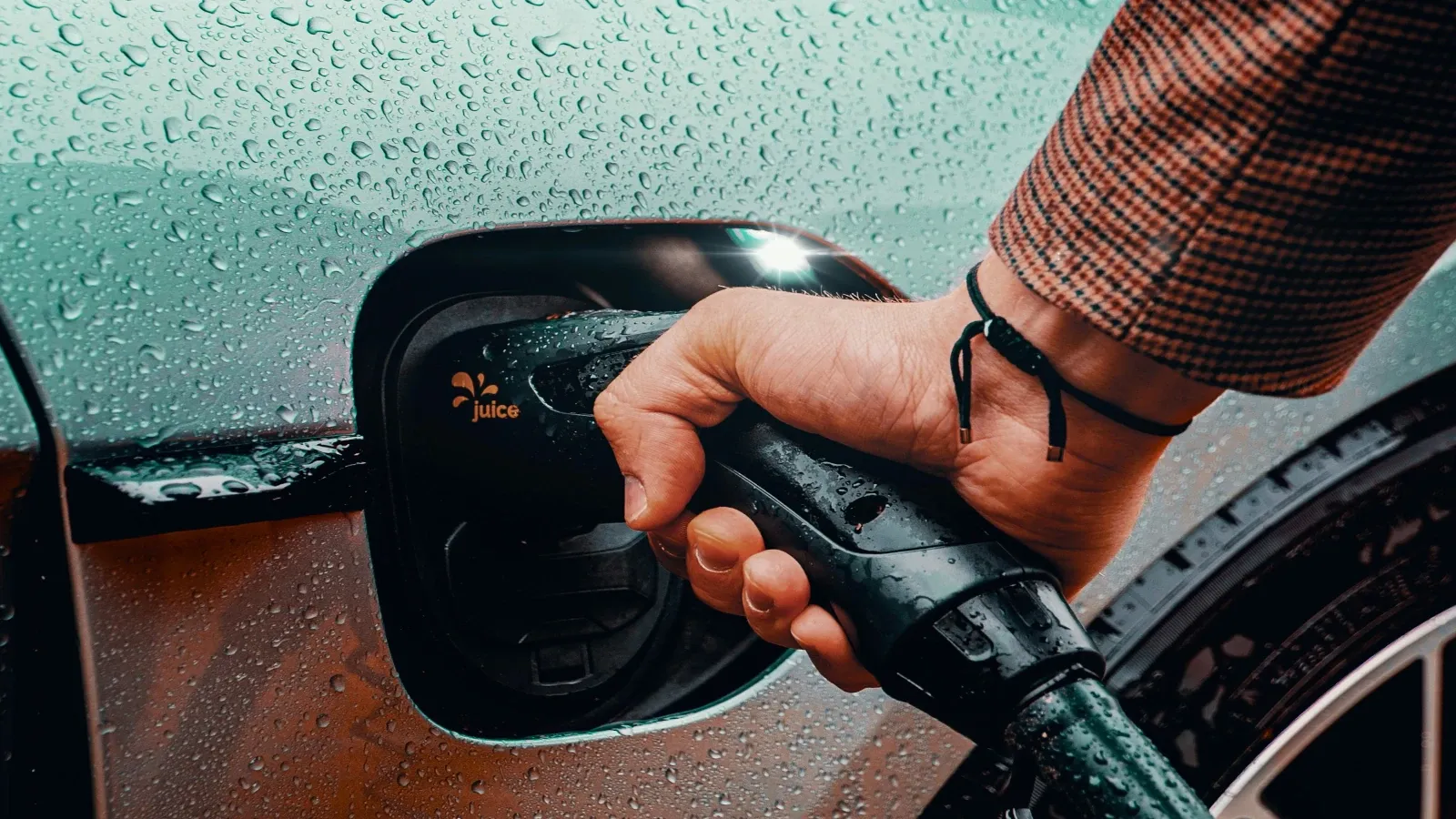
Yet when we measure that wealth, we almost never account for the disappearance or degradation of these places teeming with life. Replacing every polluting technology with its “green” equivalent will therefore not be enough. Driving an electric car does not automatically make me environmentally responsible. It still requires metals, glass, plastic, rubber, roads and car parks. Admittedly, it emits fewer greenhouse gases over time. But a wind turbine is not made of wind. Solar panels do not sprout in fields each spring.
Abandoning these technologies would be absurd. We desperately need them. But let us be serious: they will not allow the Western world to preserve its current lifestyles indefinitely.
The Great Green Illusion
Yet that is precisely the story we love to tell. A wholesale technological swap is the miracle solution. Above all, this grand replacement, this utopian transition, gives us permission to leave everything else untouched.
In other words, the lie is that you can carry on exactly as before, except that this time it will be sustainable. Who can believe that?
You only need to look at the obscene expansion of artificial intelligence, particularly generative AI, to understand that no technological transformation will save us. Quite the opposite: we are beginning to realise that these technologies may well drive us towards rock bottom even faster!
Perhaps the Problem Begins with Our Desires
As you will have gathered, solving the climate crisis would not, in itself, put humanity or biodiversity out of danger. Tackling climate disruption primarily requires transforming production methods, infrastructure and energy use. The ecological crisis, meanwhile, forces us to question our needs.
For almost two centuries, we have increasingly associated progress and comfort with expanding material possibilities. The phone we were perfectly happy with becomes obsolete a few months later. Our enormous television soon starts looking too small. Flying several times a year becomes a habit as soon as our income allows it. The examples are endless. We barely even ask why we need to replace things or why we need to consume. We can, so we do.
To be fair, these everyday observations apply only to part of French society, and to a tiny fraction of the global population. Once again, we excel at refining the means. But we push aside any discussion of the ends.
What if Living Better Sometimes Meant Doing Less?
Even if we resolved the current climate crisis, our lives would not necessarily become much better. Biodiversity would remain under attack, and all kinds of pollution would keep killing. Agriculture would not necessarily be better off either, although stabilising the climate would reduce its destructive impacts. Several planetary boundaries would remain breached. Pressure on water resources would still be very real.
Consuming less, producing less and reducing extraction would undoubtedly help. By changing the model, of course, rather than merely switching tools! Yet we have somehow managed—what a marvel capitalism is—to turn living with less into a threat.
Less must mean deprivation or regression. It is often associated with being hopelessly outdated, or even with failure.
Some people prefer travelling thousands of kilometres to “discover other people” while knowing nothing about the person three doors down. To be fair, the neighbour has one terrible economic flaw: no tour operator earns a commission when you go and talk to them.
And we often promote an overly narrow understanding of sufficiency. Living with less does not always mean living less fully. I would say sufficiency means no longer devoting so many resources to things that do not necessarily improve our lives. Worse still, those resources often go towards technologies or products that damage human health and the health of other living beings.
Here, of course, we enter sacred territory: redefining and redirecting consumption and growth. I also think we have developed a strange hierarchy of realities and needs. When an environmental measure threatens economic activity, we must immediately be “realistic”. But when economic activity runs up against the world’s physical limits, we do everything we can to make those limits more accommodating.
One small problem: physics is not much of a negotiator. An aquifer does not read growth forecasts. An ecosystem knows nothing about GDP. An extinct species will not return when economic conditions improve.
We forget all too often that economic rules are human constructions. We can change them, whatever politicians may tell us. Physical and biological constraints are considerably less flexible. We urgently need to decide which should adapt to which.
The Hardest Part Will Come After Carbon
Whatever you make of the arguments above, one thing is certain: moving away from fossil fuels will be extraordinarily difficult. We see it every day. Oil prices soar, without any actual shortage, and markets and motorists are already panicking. We are even contemplating possible oil wars in the months and years ahead.
Despite all that, I am more convinced than ever: this is probably still easier than what awaits us. Decarbonisation remains too focused on changing processes. A genuine ecological revolution means redefining their purpose.
The list of questions we need to ask is almost endless:
- Why produce so much while some people struggle to survive?
- Why replace a product so quickly when it could be repaired?
- Why systematically turn every productivity gain into additional consumption? The famous rebound effect…
- Why do we always need more to feel that we have enough?
I will say it again: everything we do in the Western world could, and should, be questioned. Ultimately, climate disruption is probably not the most difficult challenge ahead. And yet moving away from fossil fuels already promises to be one hell of a mess.
But imagine we manage it. Excellent. We will still have the soils we destroy, the resources we exhaust, the species we wipe out and that peculiar habit of treating every limit as an obstacle to overcome.
That is where the trouble really begins. Because replacing one engine, boiler or energy source with another will no longer be enough. We may finally have to ask ourselves what exactly we are trying to achieve with all this.
And I doubt that conversation will be particularly comfortable.