






Honestly, you have to admire the nerve. A word that makes the very thing it describes disappear. A cloud is light. It floats. It weighs nothing. It can even be lovely to look at. It conjures up all sorts of pleasant daydreams.
In 2026, our photos, videos, emails, files and even part of our social lives end up in that famous cloud. You could almost believe these services run on water and a few rainbows. The reality is rather different.
Behind every digital technology lies a vast industrial infrastructure. And hardly a clean one: mines, metals, factories, data centres… Then there are the billions of devices we use, replace and eventually throw away. And, to complete the picture, all of it consumes resources and energy. So no, the cloud and the wider digital world are anything but immaterial. This is heavy industry, and it is getting heavier. Yet the companies behind these technologies and services have almost managed to make it all invisible.
Your phone really does come from a mine
Few people in the twenty-first century go without a phone. We take it everywhere. We use it for everything, for nothing, for good and for ill. I admit I try to do without mine and I’m hardly a heavy user. But getting rid of it for good? That’s a different story.
A smartphone starts out as rock. Making one takes dozens of different metals. Some are considered critical because supplies are limited or difficult to access. Production is also concentrated in a handful of places, where political and economic tensions can complicate extraction and supply.
Take cobalt and tantalum, both mined in the Democratic Republic of the Congo. In the east of the country, mining takes place amid armed conflict. Armed groups control or tax the extraction and trade of minerals. These resources help fund violence and fuel rivalries over territory and trade routes. Working conditions in artisanal mines are brutal. Accidents are common. So is child labour. Workers breathe in dust and come into contact with other harmful substances, all for pitiful wages. The European user sees almost none of it.
Lithium, copper, nickel, gold and rare earth elements also raise serious environmental, social and geopolitical concerns.
Digital technology also contributes to the depletion of mineral and metal resources. ADEME studies estimated that the digital activities of one person living in France alone required close to a tonne of resources and generated more than 300 kilograms of waste each year. In round numbers, that is about a tonne of resources per person per year.
The pollution we move elsewhere and choose not to see
We often think about the problem in fairly simple terms. A device uses electricity when it’s plugged in. Since that is what shows up on the bill, we’ve been taught to do the responsible thing and switch it off when we’re finished.
Fair enough. It’s what my parents learnt, and it’s what I try to teach my children. But we forget that someone had to make the device in the first place. ADEME and Arcep estimated that equipment accounted for 79% of the digital sector’s carbon footprint. Manufacturing accounted for nearly 80% of that equipment footprint.
By the time you buy a television or a new phone, much of its environmental story has already played out. That makes the purchase worth thinking through. And once you own it, how long you keep using it matters too. My Fairphone is now six years old. In my head at least, I’ve used it long enough to feel I’ve got my money’s worth from the pollution it took to make it. That pollution hasn’t gone away, of course.
Ideally, I suppose, I’d go without a phone altogether. Easier said than done!
Even once the device has been made, using it still comes at a cost. A video doesn’t magically appear on your screen. Getting that file to you takes all sorts of equipment:
- Fixed and mobile networks
- Routers
- Fibre-optic cables
- Telecommunications equipment
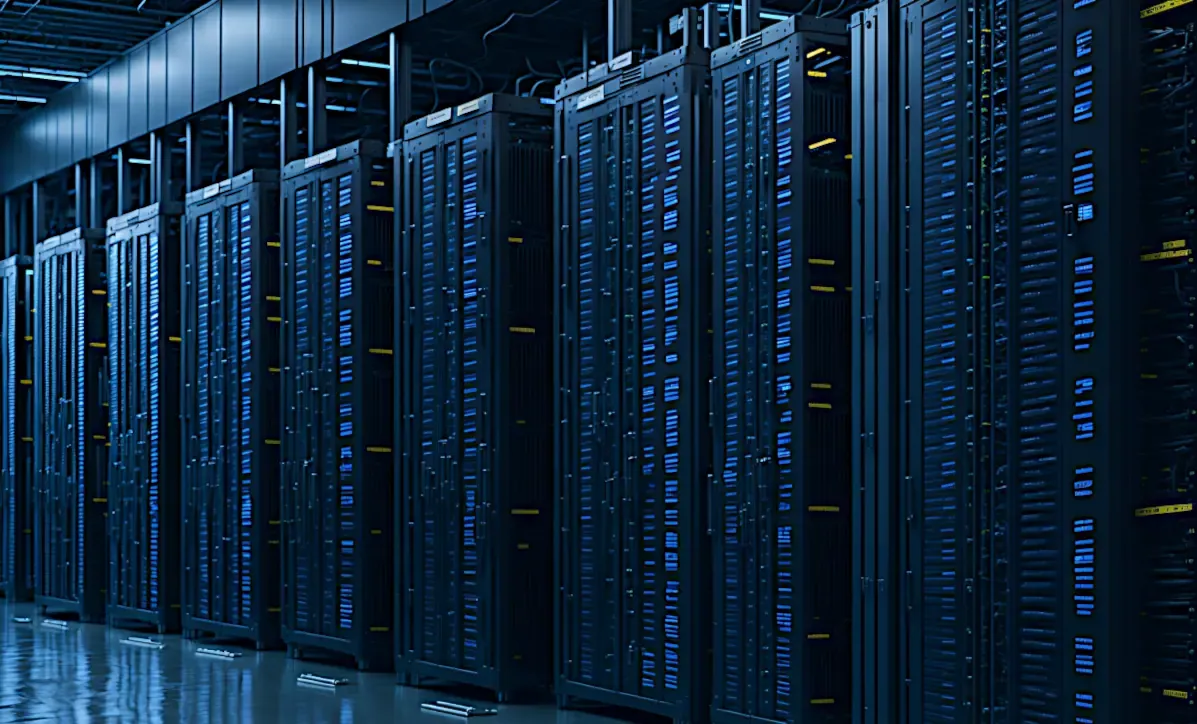
- Data centres full of servers
There’s no mystery here either. All this equipment has to be manufactured, powered, cooled, maintained and sometimes replaced. Yet we too often forget that sending, processing or storing information involves physical changes that require energy. That makes “cloud” and “virtual” particularly misleading words. Then again, those words weren’t chosen by accident!
What complicates matters is that much of the equipment carrying out these “virtual” operations is located abroad, even when the people using the services are in France.
Our digital lives rely on very real infrastructure. We simply forgot about part of the factory because it was somewhere else. A convenient thing to forget.
Greater efficiency is not enough
The usual response is that machines keep getting more efficient. And that’s true. It sounds like good news, yet it can become part of the problem. Each operation may take less energy, but if we keep adding devices and finding new ways to use them, all that extra activity can swallow up the gains. And now, on top of our existing excesses, there’s the unchecked growth of artificial intelligence.
This is called the rebound effect. A few years ago, The Shift Project, which Jean-Marc Jancovici co-founded, estimated that digital systems were growing at an unsustainable rate, even without counting AI at the time. Their energy consumption was rising by 4 to 10% a year. Digital business models also encourage us to consume more content and use more devices, all of which calls for more infrastructure.
Take my mobile plan. My provider regularly sent me offers for more gigabytes, even though I never used more than 20 to 30% of my allowance back then! I recently switched to a co-operative provider that encourages people to use less. My plan is as small as it can be while still covering what I actually use.
Another example comes up whenever we talk about pollution from transport. Someone immediately points out how much more efficient vehicles have become. And it’s true. A litre of fuel takes you further than it did in the 1980s. That could have been good news. Instead, the gain in efficiency allowed us to drive further than before. So much for that.
That’s the absurdity of the way we consume. We improve technology so we can find new uses, go faster and consume a little more for the same price. Reducing the environmental impact barely enters into it.
And now, yes, now there’s AI to factor in. The growth of data centres has already changed how the digital sector’s environmental footprint and water use are distributed.
Of course, scrapping digital technology would make about as much sense as getting rid of electricity because power stations have an environmental impact. The benefits are real. We can recognise them while assessing the environmental costs and accounting for those rebound effects.
Once again, it’s time, long past time, to make choices. Industry shouldn’t get to make them alone. We need choices that bring development, environmental protection and social justice together.
Using less starts with seeing through the cloud
What’s rather surprising is that for years we were sold a utopian vision of the digital transition in which everything would become immaterial. Wonderful.
Everything was supposed to shed its physical form. Just look at how much of our lives in the West have already gone digital. Streaming has replaced DVDs. Bills are digital. Personal hard drives are disappearing and our data floats off into the cloud. Along the way, hacks have surged and information systems have become more fragile. This widespread dependence creates a new vulnerability. The more we digitise our societies, the more likely a major infrastructure failure is to ripple across them. In that rather bleak scenario, the word “collapse” starts to make sense.
What we call “dematerialisation” simply moves things we can see into infrastructure we can’t. That makes it hard to imagine what using less would even look like. To want to save a resource, you first have to know you’re using it. Driving costs money and pollutes, and we’re aware of it. When the heating is on, you feel it. You feel it even more when the bill comes.
When you use digital services, all you can see is your own device. Sometimes even the bill disappears from view because the ads you have to sit through are paying it for you.
More than ever, we need to plan and organise how the digital sector develops. We need to decide which uses are worth it by weighing their supposed benefits against their environmental costs. And above all, we need to make sure those costs are paid.
Nothing particularly revolutionary here. Keep devices for longer. Repair them. Own fewer of them. Design digital services to use fewer resources…
Every new use deserves a question. Is it really worth the resources it takes?
Yes, every human activity uses resources and energy. It often causes pollution too. The problem with digital technology is that we’ve found a way to consume more and more material while feeling as though we’re using none at all.