






Never has humanity had so much knowledge, so much technology and, dare I say it, so much intelligence—even if, on that last point, things seem to be changing far too quickly. And yet it keeps seeking more: more possessions, more ways to destroy the conditions of its own existence.
We all know perfectly well that our economic model depletes resources, disrupts the climate and destroys the living world. Yet we carry on. Better still, we accelerate, with technologies such as artificial intelligence, convinced that a few technological innovations will repair the damage. A serious mistake, although I would love to be proved wrong in the end.
So what can we say? That we have lost our minds? Not necessarily, although some world leaders genuinely frighten me at times. Perhaps we are simply the passive nihilists Nietzsche described almost a century and a half ago.
Nihilism: When Values Lose Their Meaning
The word comes from the Latin nihil, meaning “nothing”. In everyday usage, a nihilist believes in nothing, respects no values and considers existence meaningless. But for Friedrich Nietzsche, the nineteenth-century German philosopher, nihilism is more than simply believing in nothing.
For him, nihilism describes a profound crisis of values. This loss of values is constantly invoked in Western societies and reveals multiple social failures. The beliefs that once gave existence meaning lose their authority. No ideal can justify the way we live.
For centuries, God, morality and the promise of another world gave life a direction. But when those certainties disappear, particularly in the West, a question returns: why live—and, above all, what for?
Nietzsche does not naively celebrate this void. He sees danger in it, especially when we retreat into what he calls passive nihilism. Faced with the absence of meaning or any higher purpose in existence, the individual gives up creating, yields to pessimism and chooses the security of comfort over action. A fitting metaphor for our times. But Nietzsche also sees another possible response: active nihilism. Rather than surrendering, the individual finds the strength to challenge and destroy the old values that no longer give life meaning. And no, this does not mean smashing everything up for fun. It means clearing a path towards something even harder: inventing new values. Put simply: stop putting up with things and decide what we want to change.
Growth Has Become Our Faith
Western humanity could not bear to remain without a deity for long. So it made some new ones: progress, economic growth, consumption, performance and, more recently, technology. Our salvation seems increasingly to depend on a few extra points of GDP. Am I exaggerating? Barely. Either way, it hardly sets the imagination alight.
Producing more is treated as progress by definition. Innovation is inherently desirable, whatever its consequences. Owning more means living better. In practice, it hardly matters what we produce, why we produce it or what that production destroys.
A forest has economic value when we harvest its timber. A mineral deposit becomes wealth when we extract it. Even a disaster often helps push GDP upwards through reconstruction spending.
Basically, we worship a system capable of counting destruction as wealth creation. And if that sounds provocative, take a good look at the world around you. I am not exaggerating. Everything we have been doing over the past century has brought us here: unfolding ecological disasters, alongside recurring economic and health crises. Yet a substantial share of the population insists that we must keep going. I admit I do not understand.
Nietzsche obviously never analysed contemporary GDP. But his critique of idols and of values that can no longer justify existence offers, in my view, a way to question this new economic religion.
Destroying What Keeps Us Alive: Ecological Nihilism
Nihilism clearly connects with the ecological crisis—otherwise I would not be discussing it. Nietzsche criticised philosophies and religions that placed greater importance on an ideal world or an afterlife than on actual existence, here and now. Those famous “otherworlds”, supposedly superior to our life on Earth.
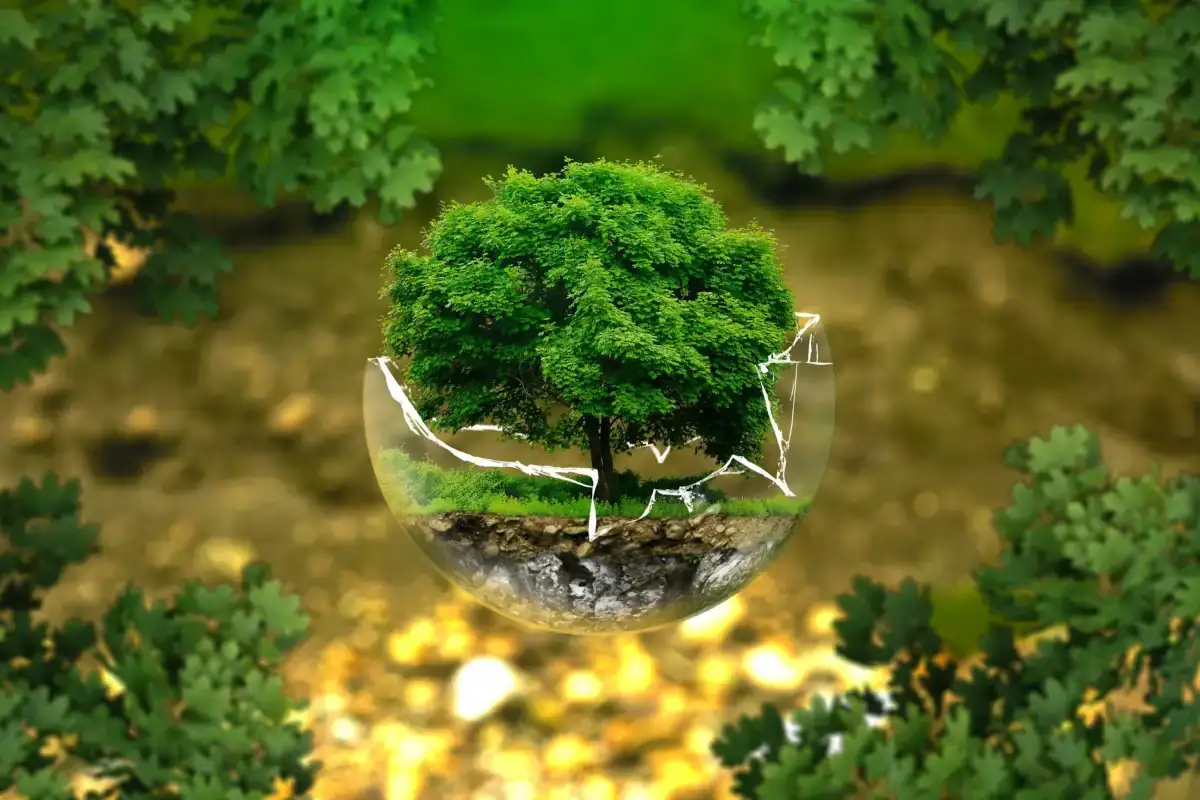
Today, we have invented an effective version of this denial: we sacrifice the living world to economic abstractions—profitability, competitiveness, growth and financial returns. We destroy the soils that feed us, the ecosystems we depend on and the climatic balance that makes our societies possible.
And why? To maintain a model whose physical limits we already know.
I see this as a form of modern nihilism: a civilisation that claims to celebrate life while organising its material degradation.
To be clear, Nietzsche was no environmentalist. It would be absurd to attribute environmental concerns to him or turn his will to power into a biodiversity protection programme. But his philosophy sheds light on a question: what are values worth if they lead us to destroy the very conditions of existence?
Passive Nihilism, or “After Me, the Flood”
I hear this kind of talk all the time. Passive nihilism involves exhaustion, resignation and an inability to create new values. You may recognise a few attitudes among the people around you: “It’s too late anyway.” “Humans have always done this.” “You can’t change the system.” Or: “We might as well enjoy life while we still can.”
A very convenient way to turn supposed powerlessness into a justification for doing nothing. I push back against this every day at home. And yes, I know: I am told I go on too much, that I am a pain, that I should stop thinking and live a little! Except I am living. And my life is pretty good, actually.
But there is another equally problematic attitude: believing that technological progress will inevitably deliver the solutions. Technological solutionism has become the magic answer. Nothing really needs to change: replace petrol and diesel cars with electric ones, fossil fuels with renewables, and depleted resources with new or recycled materials.
These changes are essential. But if their only purpose is to extend the current model indefinitely, they will merely shift the problems elsewhere. Here I go again—call me a pain if you like—but changing the means without questioning the ends will achieve absolutely nothing. We will keep extracting and polluting just as much. We will keep needing more energy. The living world will be no better off. Quite the opposite.
We urgently need to imagine new ways of producing, working, sharing and inhabiting the Earth. And here is something we often get wrong: a society that prioritises quality of life, human relationships, social justice and the protection of the living world might actually be more desirable than one obsessed with growth. Surely it could hardly be worse!
Why NIHILIUS?
NIHILIUS is therefore a deliberately paradoxical name. It evokes nihilism, the crisis of values running through modernity. But it embraces neither despair, nor indifference, nor destruction. Quite the opposite.
This project begins with a personal conviction: the ecological crisis is not merely a climate, energy or technological crisis. It is also—and above all—a crisis of meaning, a crisis in how we decide what deserves to have value.
Even if my articles sometimes suggest otherwise, I do not claim to have the answers. I simply want to question what seems self-evident. Sometimes, I would even call these things contradictions or beliefs. Especially when those very assumptions, contradictions and beliefs are driving us into a wall, so often making us act against our own interests.
With a little irony, sometimes some provocation, but above all a desire to understand. True nihilism is not questioning our civilisation. It is continuing to destroy the world that keeps us alive while calling it progress.
Welcome to NIHILIUS.