




You could even say they were decades ahead of their time. Today, the evidence is everywhere. Yet environmentalists still struggle to convince people. How can you get the diagnosis right so often and fail so consistently at the ballot box?
In a depressing paradox, those who sounded the alarm back then are now seen as people who stop everyone else from enjoying life. The worst part is that those promising business as usual still pass for the reasonable ones. Meanwhile, environmentalists are labelled fascists, extremists or, quite often, cranks. Sometimes they are simply dismissed as useless. Pathetic ideologues with no connection to reality! Nothing less.
The Environmentalist Is the Perfect Scapegoat
More recently, the finger has been pointed squarely at them. They are the culprits! If wildfires destroy forests in the Landes, it is supposedly because environmentalists prevent proper forest management.
They are accused of undermining food sovereignty and driving farming into bankruptcy by opposing huge irrigation reservoirs known in France as “mega-basins”. All they are doing is reminding us that water is a common good, not something any particular interest group can claim for itself.
When environmentalists draw on health agency reports to highlight collapsing biodiversity and the serious risks certain pesticides pose to human health, they become zealots, totalitarians, enemies of progress and growth.
Environmentalists are regularly accused of weakening energy independence by demanding the closure of nuclear power stations such as Fessenheim. They are then held directly responsible for rising electricity prices and the temporary use of coal-fired power stations to compensate for intermittent wind and sunshine. Their argument has always been clear. Nuclear power is an expensive technology, requires complex maintenance and is not without danger. Waste management also poses real problems.
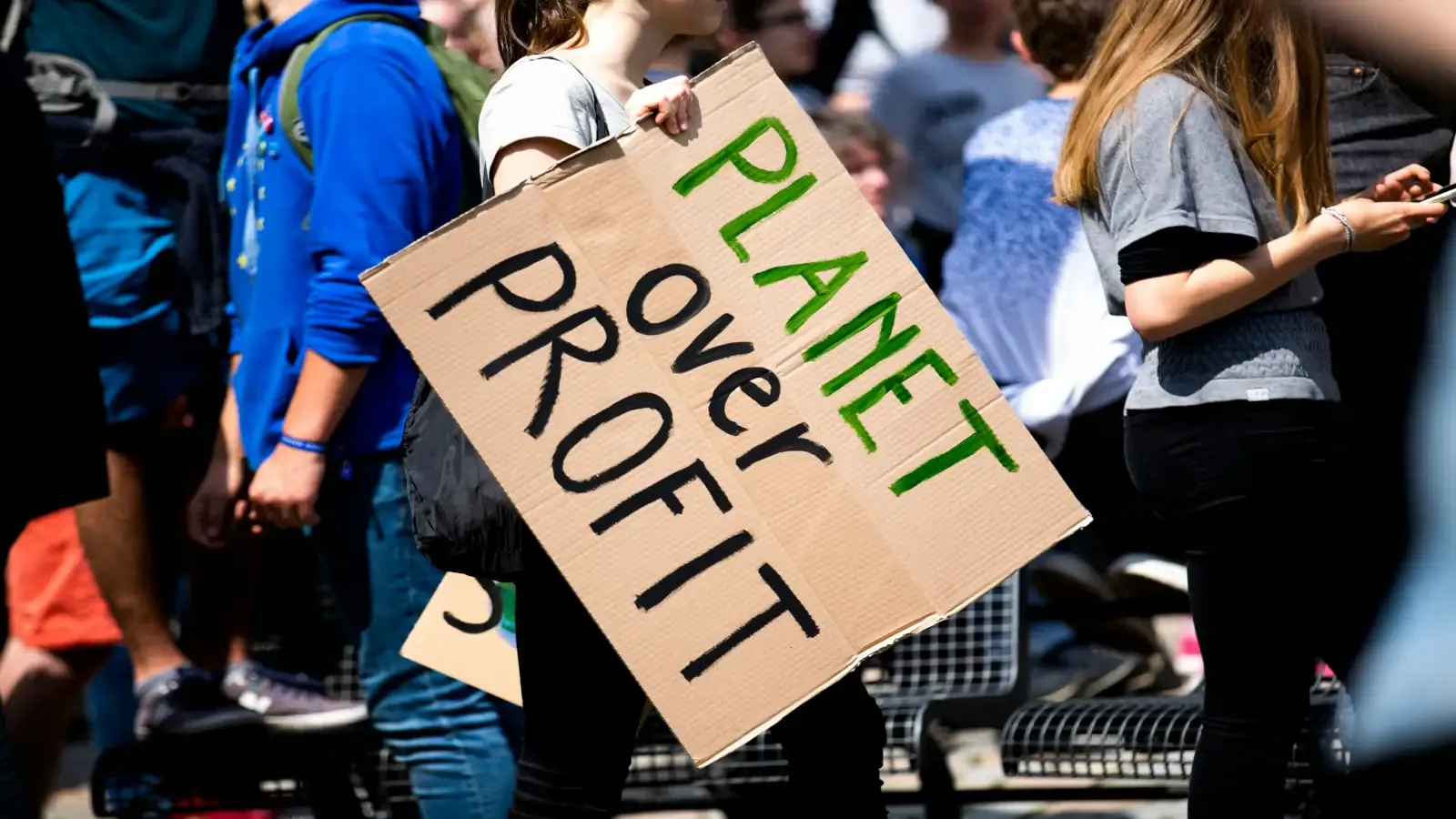
“Punitive environmentalism” has become their opponents’ favourite line of attack. They are accused of wanting to punish people and drag society backwards. Whenever they oppose major infrastructure projects—motorways such as the A69, railway links such as Lyon–Turin or airport expansions—they are branded enemies of progress and destroyers of jobs. Yet, most of the time, they are simply questioning whether public money should fund projects they consider outdated in the face of planetary limits and the climate emergency.
Finally, let us remember that the Greens have almost never been in charge. It is difficult to blame them for everything that goes wrong.
Ecology Versus Green Politics
Ecology is, first and foremost, a science. It studies relationships between living organisms and their environment. It relies on observation and measurement.
Green politics goes further, questioning how we produce, consume and work. It also examines how we travel and share resources. Critiquing society is part of its very essence.
Logically, it eventually raises an uncomfortable question: how do we organise a sustainable human society within a physically finite world? In other words, sorting your rubbish, riding a bicycle or planting a few trees is not enough to constitute green politics. Whatever its opponents would have us believe, whether out of convenience, lack of insight or sometimes sheer stupidity.
Ecology means observation, quantification and scientific analysis. Green politics draws on that scientific evidence to question economic models, power relations, inequalities and the place we give the living world.
This is probably one reason green political movements suffer such crushing defeats: challenging the system is fundamental to their very existence.
A History of Visionaries
As early as the nineteenth century, the idea emerged that humanity and nature shared a common fate. In the twentieth century, thinkers such as Jacques Ellul in France highlighted the dangers of a society entirely subordinated to technology and industrial progress.
In the United States, Rachel Carson published Silent Spring in 1962. Her book exposed the harmful effects of pesticides and is widely credited with helping launch the environmental movement, particularly in Western democracies.
Then came the 1970s. This was when green politics really came into its own. In 1972, The Limits to Growth, a report commissioned by the Club of Rome, also questioned the possibility of infinite material growth.
Two years later, René Dumont stood in the French presidential election. His glass of water on television already symbolised the vulnerability of our resources. He would be remembered as France’s first green presidential candidate. The result: 1.32% of the votes cast.
The man was decades ahead of his time. The voters were clearly taking their time catching up.
Les Verts, the French Green Party, emerged in the early 1980s. Meanwhile, the protests at Larzac and Plogoff, alongside anti-nuclear campaigns, had helped bring environmental issues into public debate.
Since then, the evidence has piled up. Across the “democratic” world, environmentalists have spoken out and sounded the alarm. The IPCC documents global warming; IPBES documents the collapse of biodiversity. Environmentalists no longer need to predict disasters. We witness them almost every day. Yet their electoral results remain disappointing.
Environmentalists: Champions of Division
I admit that green movements deserve credit for one remarkable talent: making their own lives harder. In France, one question has divided them from the outset: should they remain politically independent or join alliances on the left and in the centre?
Some advocate a break with capitalism. Others envisage a market economy with better regulation.
For committed Greens, opposition to nuclear power has always been a cornerstone. Over time, some have come to see it as a useful tool for decarbonisation.
Some support degrowth, others green growth.
Debates over Europe, agriculture, industry and taxation continue to fuel divisions.
These political parties overflow with ideas and generate constructive debate. But debate itself is never the problem. Quite the opposite: it is the foundation of democracy. Unfortunately, when internal power struggles become more visible than policy proposals, voters can no longer make sense of it all.
And by endlessly negotiating constituencies and positions with the major parties, the Greens have often lost both their independence and a clear identity. Electoral alliances, most of which have failed, have done much to muddy their message.
Being green means advocating a comprehensive transformation of society. Certainly. But that message gets diluted when you start talking about barbecues as symbols of male dominance, move on to defending mega-basins and finish by saying you “don’t give a damn about farmers’ profitability” at a time when some farmers are genuinely struggling.
How can you advocate joining forces with La France Insoumise on Monday, then propose an alliance with the Socialist Party on Tuesday? Voters cannot make sense of it.
Another difficulty is being trapped in an urban, university-educated and relatively privileged image—not to say bourgeois. The familiar Parisian “bourgeois bohemian”, who owns no car and earns enough never to worry about making ends meet. Telling someone who lives thirty kilometres from work to give up their car is easy when you have a metro station on your doorstep.
It just goes to show: you can be right about the climate and the degradation of the living world while being completely out of touch with social realities.
A Public That Would Rather Not Know
Politicians are not solely responsible for this failure. We citizens also harbour a few contradictions of our own.
Promising to overhaul the system guarantees only defeat. Almost everyone accepts the need to tackle climate disruption. But if doing so affects their comfort, habits or purchasing power, that is another story. Their ballot paper will not be turning green!
You want to protect biodiversity? Of course you do, like almost everyone else. But suppose a candidate promises to stop all new construction to prevent further land development, while you cannot find somewhere to live or you work for an estate agency. You might think twice about voting Green. To cut emissions, we need fewer planes: good luck getting a candidate elected on a promise to restrict air travel. People will see it as an attack on their freedom, certainly not as the freedom to live in a healthier environment.
The examples are almost endless. When facts threaten our comfort, identity or habits, we will find any excuse to downplay or even deny them. This is what we call cognitive dissonance. And sometimes it affects even the most committed among us. It often remains easier to challenge the messenger than to change our behaviour and habits.
That is when the environmentalist becomes a moraliser, a miserable degrowth killjoy, an enemy of progress, even an extremist or a fascist. Never mind that their diagnosis rests on decades of scientific research.
This is not unique to green politics. It has shaped political discourse for fifty years. At election time, voters prefer someone who makes promises—even when they know those promises are lies—to someone who sets limits, whose reality leaves no room for doubt.
Environmentalism Without the Environment
Greenwashing is no longer merely a business strategy. It is becoming an electoral tactic too.
Most parties have understood perfectly well that environmental issues can no longer be left out of their speeches. But they have also realised that implementing a green programme would demand a great deal from people in the short term. So decisions get postponed.
The result is a festival of contradictions. Promises of carbon neutrality by 2050 fly around. At the same time, these politicians advocate ever-increasing flows of goods, people and materials to sustain enough growth to preserve the system.
Announcements about biodiversity protection abound. Yet despite the laws, land development continues. “Sufficiency”—living with less—has almost become fashionable. But the government spends its time encouraging consumption, a pillar of that same system.
For these politicians, technological progress also plays the role of providence. The slightest innovation becomes another reason to change nothing. Technology will spare us the trouble of questioning how much we produce and consume—and, above all, what any of it is for. Once the words “artificial intelligence” enter the conversation, there is no need to worry anymore. It is THE solution to all our problems.
Technology obviously helps solve environmental problems. But whatever technology we use, the planet’s physical limits remain. And technology does nothing to remove the urgent need for political choices and trade-offs.
For further evidence of the widespread environmental backlash, just look at the supposed policy programmes of successive governments over the past five years and the preparations for the next presidential campaign. To sum it up: nothing is happening. Environmental issues have disappeared. Meanwhile, the Greens are spinning their wheels, still unable to offer a shared vision. Hardly an encouraging prospect for France in the years ahead.
And Now Environmentalism Is “Punitive”
The latest fashionable phrase has become unavoidable in political discourse: “punitive environmentalism”. Describing every environmental constraint as “punitive” is staggeringly hypocritical.
Of course taxing fuel without providing alternative transport makes people angry. Likewise, forcing low-income households to pay for home renovations prompts resistance. Making rural motorists feel guilty is another excellent way to manufacture rejection.
Yet we collectively accept speed limits that allow us to use the roads while minimising risks. Health standards reduce the risk of illness and death. Banning dangerous substances seems natural and legitimate.
So I admit I struggle to understand why environmental limits should, as a matter of principle, be considered an assault on freedom.
The only explanations I can see for this rejection are the ineffectiveness of the proposed measures, the lack of social justice and the unequal distribution of the burden. Environmental policies demanding the same sacrifices from a minimum-wage worker and a yacht owner can neither be understood nor accepted. I know that sounds populist or clichéd, but it is simply reality.
Without social justice, environmental action becomes just another burden, particularly for those already carrying plenty.
Yet the relative failure of green politics and these misunderstandings do not mean its ideas lack legitimacy or a sound basis. They reveal how difficult we collectively find it to turn scientific knowledge into meaningful, fair democratic decisions.
And let us be honest: the Greens need to stop their endless infighting. They have also forgotten one small detail: being right is not enough to win elections. The IPCC can demonstrate that we are heading straight for a wall. That does not mean voters will agree to change their car, heating system or way of life. Especially if nobody explains how they will afford it.
As for us citizens, we must finally accept that no serious political programme can guarantee today’s Western way of life forever.